Turning a Segmented Swagger Stick

This blog is the result of my son and his fiancée asking to see samples of various wood textures with a finish applied so that they could choose a particular wood for a matched pair of goblets.  In your endeavor to find designs or ideas, remember that the next project you envision may be whimsical and it may also serve a useful purpose.

As I was mulling the various ways to display the multiple woods the thought of a Swagger Stick came to mind.  A friend who is a coin collector had shown me a hand-made Swagger Stick made with various woods from the Philippines with a dated Philippine coin embedded in the knob.  As that particular Swagger Stick was made during World War II, the tip was an expended pistol cartridge.  Research on-line showed the typical Swagger Stick was approximately 18 inches (45.75 cm) long.  Swagger Sticks were carried by commissioned British officers and also senior non-commissioned officers.

For my sample Swagger Stick I picked seven examples of woods that would make good goblets from my ‘stash’ of turning blanks and then found seven pen blanks of similar woods to use on the Swagger Stick.  A thin slice of Ebony between each wood type contrasts very well with the chosen woods.  The quantity of wood in the actual shaft being six, ultimately requiring each segment of wood to be about 2-3/8 inches (5.4 cm) long to allow for a 1/8 inch (31 mm) slice of ebony.

First I sliced 1/8 inch (31 mm) pieces of Ebony pen blank to go between the various wood types.  I then trued up one end of each pen blank.  Using two-part pen epoxy I then attached a slice of Ebony to each pen blank.  Clamping each assembly ensured a tight glue joint for the each assembly.  I then set the glued assemblies aside for overnight setting of the epoxy.

I decided on using a 10 X 32 threaded rod to provide additional strength and to minimize the weight of the display stick.  For the tip on my Swagger Stick I decided to turn a brass block.  Turning brass on a wood lathe is relatively easy but you must ensure the metal shavings do not get into the motor of your lathe.  I drilled the center hole for the 10 X 32 threaded hole before I turned the tip.  Using a 10 X 32 tap I threaded the tip so it could be threaded onto a segment of 10 X 32 threaded rod clamped in pin jaws in my mini chuck.  By threading the brass onto the threaded rod it ensured the brass would remain true to the threaded rod.

Once the two-part epoxy had cured in the glued assemblies I found an issue that I had not planned on.  A 3/16 inch brad point drill bit sized for the 10 X 32 threaded rod flexes too much to be able to drill the complete length of the 2-1/2 inch blanks.  I solved this issue by drilling slightly more than half way into the blank and then reversing the blank and drilling slightly more than half way from the other end.  Any mismatch would be in the center of the blank and the hole at either end would be perfectly centered.  I could have increased the size of the threaded rod to something like ¼ X 20 to allow for using a larger drill bit but that would have also increased the overall weight of the Swagger Stick.  This drawing illustrates that drilling from both ends will keep the holes at the ends of the blanks in the respective centers of the ends and any mismatch would be in the center of the blank.  The mismatch is not as great as shown in drawing.
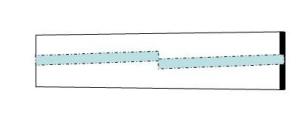
drill

Once all of the segments had been drilled I cut a length of threaded rod about four inches (10.16 cm) long.  To rough the segments to their approximate tapered diameter I made small wooden bushings similar to pen bushings.  First I turned a spigot sized to fit into my live tailstock.  Then figuring the end of the stick near the brass knob would be 0.5 inches (1.27 cm) while the end at the wooden knob would be 0.9 inches (2.286 cm) I drew a simple chart and calculated the diameter of seven bushings.  Drilling a center hole in each bushing ensured they would line up when threaded onto the 4 inch piece of threaded rod.  I marked each bushing with a sequential number for ease in identifying which bushing to use.
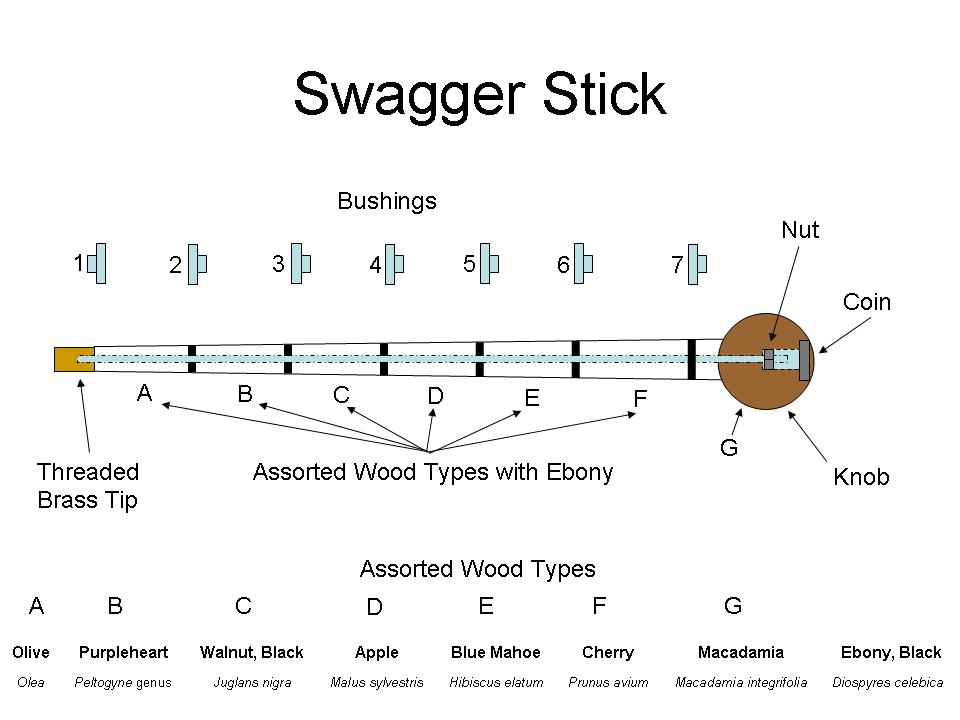
SWAGGER stick WOODS

I put bushing number 1, a piece of Olive wood, and then bushing number 2 onto the 4 inch threaded rod.  I clamped the end of the threaded rod at bushing number 1 in a chuck with pin jaws.  Then I brought up my live tail stock to hold bushing number 2 in place.  I then turned the first segment of my stick.  I then removed bushing number 2, the Olive wood, and bushing number 1.  The next segment would require using bushing number 2 to be next to the pin chuck and bushing number 3 to be at the live tail stock.  I then proceeded to turn each segment individually with the respective bushings until all segments were to their approximate proper size.  This is actually easier to do than try to write on paper.

The diameter of the wooden knob was the result of visiting a hiking store and just feeling the knobs on various walking sticks.  The knob would be about 3 inches (7.62 cm) in diameter.   Once I knew the relative diameter that felt right for my hand I basically copied that diameter at home.  In the knob, I figured on an inlaid coin could serve as a focal point.  A quarter showing the current year could identify when the Swagger Stick was made.  There are Forsner bits that are sized to the U.S. quarter but I figured I would inlay a gold plated presidential dollar.  While the coin sounds expensive, an uncirculated coin can be had for about $2.50 at a coin show.  I used a 1 inch (2.54 cm) Forstner bit and found the gold clad dollar coin fit snugly.  I turned the knob to its relative size and then drilled a 3/16 inch hole with the drill bit that I had drilled all of the segments with.  The hole is centered on the end of the knob that will be attached to the shaft.  I then parted the knob off of the turning blank.  Reversing the knob I then drilled the 1 inch (2.54 cm) hole the depth of the coin.  I then drilled a ¾ inch (1.905 cm) hole to allow for a nut.

Threading the segments onto a 20 inch (50.8 cm) threaded rod allowed me to place a nut inside the wooden knob and use two nuts at the opposite end as jamb nuts.  I then proceeded to finish turn the shaft, sand through the various grits of sandpaper (remembering to sand with the grain between grits to remove sanding marks) and ultimately apply the finish.  I used French polish for this project.

Removing the two jamb nuts and attaching the brass knob completed this phase of the project.  I used a drop of thread sealant to ensure the brass knob would not loosen unexpectedly. The remaining task was to make a small display stand.  This was as simple as a board with two uprights to hold the Swagger Stick.  I did sand a dimple on each upright to keep the Swagger stick from rolling off of the stand.

2 part Pen Epoxy

1 inch Forstner bit

3/4 inch Machinist bit

Chuck with Pin Jaws

French Polish

Embellished Ornaments

As this blog is for informational purposes, I assume no responsibility for the operator.

There was an article in the ‘Winter 2008’ issue of Woodturning Design that caught my interest seven years ago. This article was on Twisted Wire Ornaments by Davis Reed Smith. As it is currently only April some may wonder why they should be thinking about ornaments at this time of year. Well there is a two fold purpose to learning how to make this type of ornament. One is to learn the ease that these ornaments can be fabricated and the second is to learn the numerous ways these ornaments can be modified with minimal effort. I will not spend much time describing the very thorough article. The jigs and fixtures are very simple but they ensure a quality final ornament. I will spend some time explaining how I embellished the various ornaments.

 Xmas_tree_orn Xmas_tree


The wood used to make the ornament will require some consideration. I have had excellent luck using cherry or other fruit woods like apple or pear as they are not bland but they are also not too brightly colored.

I use numerous combinations of colored anodized aluminum wire to form the twisted wires that follow the theme I am attempting to indicate. Simple twisted pairs of wire for a Christmas theme can be red and green, silver and gold, or any other combination that catches your creative spirit.

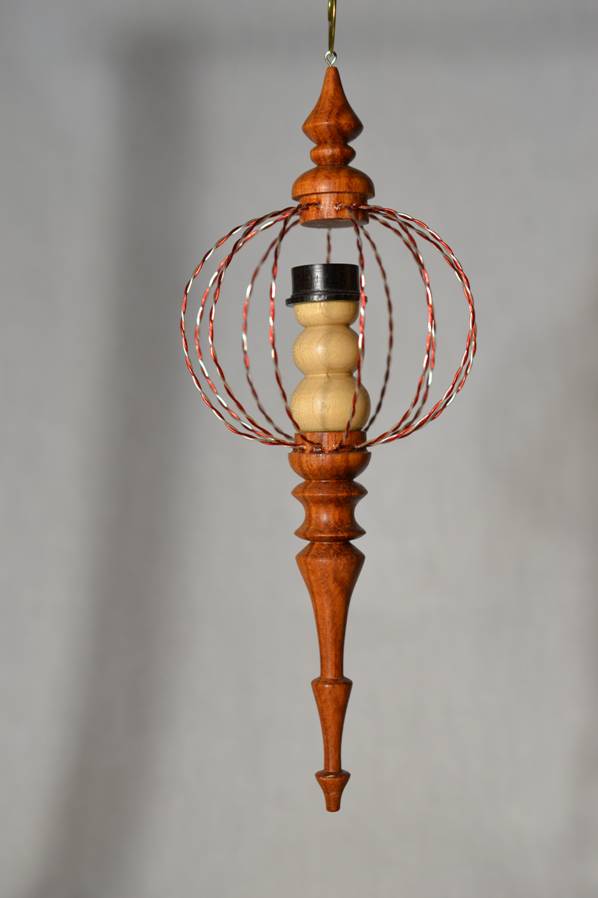
Thought should be given to the theme the ornament will be attempting to display before assembling (gluing the wires). The article within Woodturning Design did not mention putting any item within the ornament but I have found the ornament captures more attention with something either sitting on top of the finial or swinging from the cap. I have spun miniature snowmen to sit on the finial. Paint pens can help color the snow man’s top hat black if you do not want to use ebony. For one ornament I turned a miniature sombrero to hang within an ornament that was Cinco-de-Meyo themed. The ornament with the Cinco-de-Meyo theme also had three twisted wires of the appropriate colors to match the Mexican flag. After figuring that a small eye hook can be screwed into the cap to hang the sombrero I realized there are many other items that can be put in ornaments.

Mini-Earring

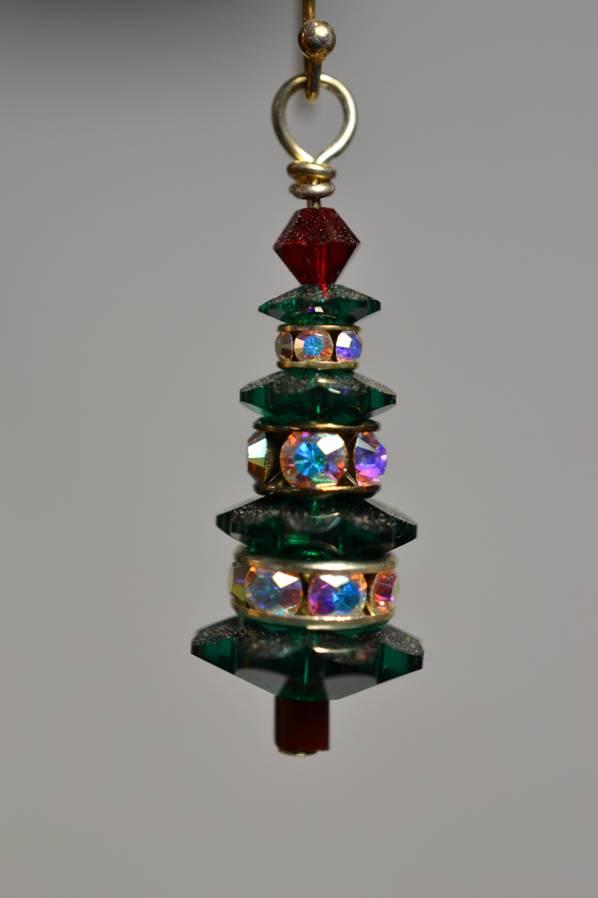
The quest to make each ornament better than the last has opened a floodgate of ideas. The sombrero ornament is still revered by the recipient as they have never seen anything like it anywhere. I have a friend who mentioned the possibility of hanging a single earring within the ornament. A fast review of various crystal vendors like Fire Mountain Gem and Beads showed they typically have web sites showing customer ideas. From these sites I realized that the cost of various gems, pearls and crystals was very reasonable. I quickly realized the customers were thrilled when they found out that I use Swarovski elements in my ornaments. This bling has a unique appeal to women that asked if I could make them earrings to match the item within the ornament.

Crystal_Snowman Pearl_Snowman

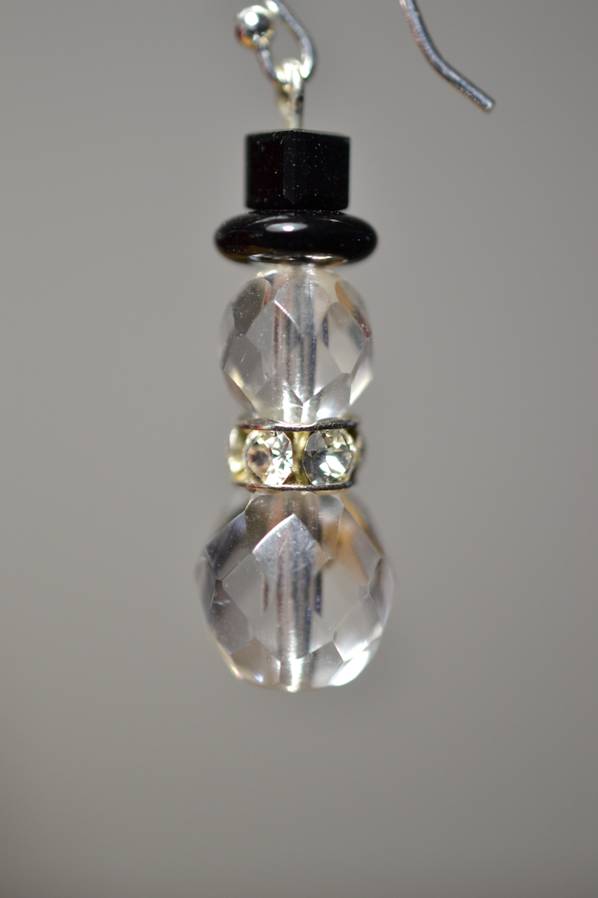
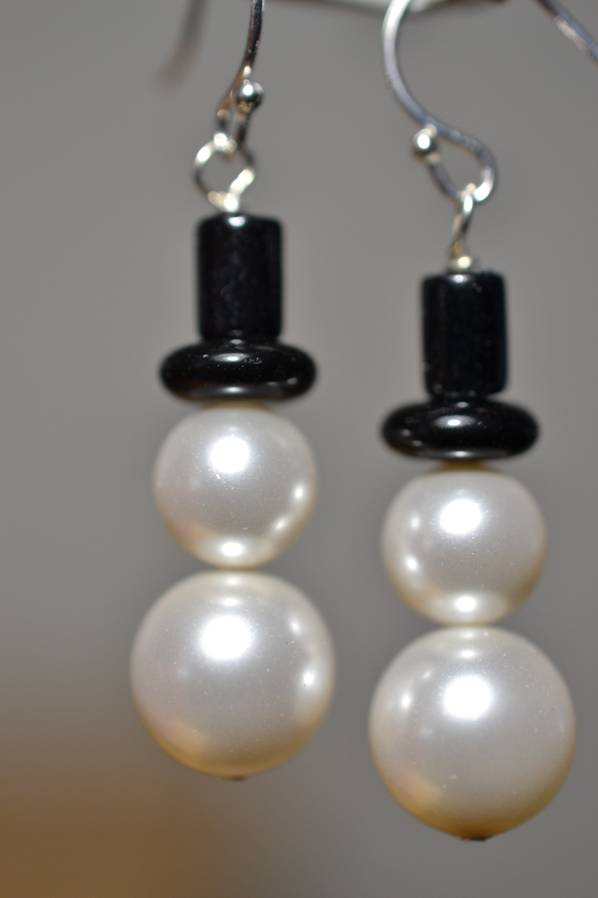
If you are planning on placing a turned snowman in the ornament then the snowman needs to be attached to the finial before gluing the wires. I have found that putting a eyepin in the cap allows for an earring to hang within the ornament. Stacking two crystal pearl beads, a black flat bead and then a black tube bead makes for an eye catching snowman that shimmers and seams to float within the ornament. A basic book on jewelry fabrication or even just following the directions on one of the many web sites can show how easily the jewelry items can be fabricated.

Snowman_orn

Some of the web sites that these books and others are available from;

http://www.FoxChapelPublishing.com

http://www.gmcbooks.com

http://www.lindenpub.com

http://www.schifferbooks.com

http://www.springhousepress.com

http://www.taunton.com

http://www.sterlingpublishing.com


Sharing

The subject of this blog is going to be sharing. While some may hoard all the wood and other materials they acquire, there are advantages to sharing. Yes, we all know that person who if offered something will never reciprocate. It will not take very long to figure out which of your old and new friends who will be more than willing to share with you as much if not more of treasure.

A few years ago a friend called to inform me that he had a very old apple tree that he had to cut down. Dave is not a woodturner but he thought I might have use for some of the wood even if it would only be to burn it in my wood stove. As a thank you, I turned Dave a pen using his apple wood. Two years ago another friend had a very large pear tree come down in a storm and she wondered if the wood might be good for woodturning. For this friend I turned a miniature bird house. Yet another friend needed to cut down a black walnut tree and wanted to give me some of that wood. For him I made a pen and pencil set. Another friend is a member of a woodcarving group that auctions off pieces of wood as a fund raiser for their club. There have been neighbors that ask if I would like some of their trees that they are having removed. One neighbor in particular asked if I would like some ‘lumps’ that were growing on her trees. She did not know the correct name was burl but when I turned a miniature birdhouse using one of her ‘lumps’, it gave me a chance to explain and actually show her how unique the grain is within a burl.

By making something on the lathe to give to the person using their own wood has sparked others to offer me more wood. There are always going to be the people that as the joke goes; ‘have streets named after them – One Way’, but if you share your bounty with others, the typical friend will want to share some of their bounty with you. If you give some friends each a block of wood you may be amazed at what they ultimately make from that wood. You might envision a bowl while they would make a pair of goblets or they may make a platter.

Another way of sharing is giving of your knowledge. One turning friend has always had problems using a skew. When we were discussing how I use a skew, I realized they had not sharpened the edge correctly. I mentioned the Mike Darlow sharpening guides that allow you to get the edge back to a known angle. Once she got a good edge on her skew she has been very happy with her turning results.

A while ago another friend called me to say they had a problem with turning blanks coming off of their lathe! They wanted to come to my shop to see how I attached the wood. As they only live a few miles away I told them I would stop over and see how they were attaching the wood to the lathe. After they had turned the outside of a bowl using a wormwood screw, they reversed the wood and mounted it in a standard four jaw chuck. Before they turned the lathe ON again and while they were reaching for a tool, I just hit the wood with my palm. The turning blank fell off of the lathe! The issue was the person did not have the strength to tighten the jaws properly. This was remedied by swapping the standard ‘T’ handle chuck wrench for an ‘L’ shaped Allen wrench. Now they are able to tighten the jaws properly plus they now nudge the wood with the palm of their hand to check that it is securely attached to the chuck.

Holiday Sales

As this is the season of Craft Fairs and Craft Shows I thought this blog should be about displaying your turned items.

The very first thing to consider is something to cover the table top. This does not have to be an actual dining table cover but can be as simple as a paper table cover available at party supply stores. A basic color like white will make your turned articles stand out. Avoid a print with multiple colors as it becomes too busy and would interfere with easy viewing of the items on display. By having a solid color it will not distract the viewer from seeing your turned object. A table skirt is an accessory that allows the table to look more finished and also provides you with a place to put / hide your boxes that you used to bring the your objects to the fair / show.

A nice addition to your display is name cards for your articles. This is so the potential customer can ask about a particular item. I use a simple computer program that is sized for business cards like the Avery 5877 or 8371. By printing the tags with information to fill only the bottom half of a business card then you can fold the card in half lengthwise when you put the cards on the table. The card standing up in a basic tent shape is easier for the viewing by your potential customer. If you have all of the cards used to identify your turned objects sized the same then your display will look more professional. For my typical identifying card I use a soft yellow card made using card stock printed with black ink. This will contrast with the white table cover yet was easily readable. Try to avoid using white cards on a white table cover.

The font used on the cards should be easy to read so I use something similar to ‘Times New Roman’ or ‘Arial’. I avoid using any script style font as it is harder to read at a distance. The items that I make typically contain multiple types of wood so I use a font size slightly smaller than that used for the item description to identify the types of woods contained in the turning. As I also use different types of sea urchin shells for ornaments I use the common name for the various shells like Alphonso, English Channel, Fragile Pink, and Sputnik so the customer will know what they are looking at.

Displaying ornaments is something that requires a little thought. If the ornament is viewable from any side then there is no problem. A miniature bird house might have the opening sideways from the customer if the hanger is positioned incorrectly. If you designed your ornament to hang on a Christmas tree branch you will need to display your ornament at the show in a similar angle to the customer. I solved this issue by making a display stand and having golf tees for the ‘branch’ that the ornament will hang on. This will put the ornament at the same angle as a typical customer might hang it on a tree after they purchase it from you. If you are selling ornaments, be sure to have single and multiple ornament stands available for purchase by your customers. Some people want to display their turned ornament year round so they will want a stand to do this. Remember this is another item to sell!

If you are trying to display pens then remember that the customer is giving your display a fast once over and might miss the pens if they are laying flat on the table. A slight tilt towards the customer will allow them to see your pens better. I have found that the slight angle also reflects light back towards the customer making the metal bands and clips appear brighter.   A simple stand similar to the type used to hold a small picture frame will lift the pen up off of the table and make the pen look more elegant. A tray of pens can have something as simple as a piece of wood under the back edge raising the back and tipping the display slightly towards the customer.

Remember to make a sign for the front of your table. I took my standard business card and enlarged it to fit a standard 8-1/2 X 11 sheet of card stock. This is attached to the front of my table skirt. A receipt book is something to have on-hand. I preprint my information on Avery labels and stick this label on the pages in the receipt book before I go to the show / fair. As a final note make sure you have business cards available for the potential customers to take with them.


Free Wood

In the past few years I have been very lucky in that numerous friends and acquaintances have given me free wood for use in woodturning. The assortment of wood has ranged from pear, black walnut, apple, live oak logs and even some large maple burls. This blog is going to be two fold. The first portion will be concerned with my attempts to properly dry the wood. The second part will be various ideas I have come up with in an attempt to pay these people back for their generosity.

You could share some of the newly acquired wood with your woodturning friends. This has the possibility of different people seeing different ‘things’ in similar pieces of wood. By sharing your bounty with your friends hopefully these friends would share any woods they acquire with you. When you are given a whole trees worth of wood this can become a major undertaking so this is an opportune time to share.

Any time you cut a piece of wood, the moisture in the log will attempt to stabilize to your ambient humidity level. This typically causes the end checking or splits on a log. If you are going to turn the wood while it is green then you will need to turn the wood as soon as possible.

If you want to turn dry wood then you will need to do a few things to ensure your new treasure does not become just so much fire wood. The first thing I do is use a broad tipped permanent marker to write the type of wood and the date on the end of the logs. The next thing is to seal the ends of the wood with a sealant similar to End-Coat. If you use a latex paint to seal the end of the logs you will need to put the type of wood and date on the logs after the paint is dried. Once the sealant and labeling is dry then the logs will need to be stacked and covered loosely or stacked in a drying shed. The main objective is to allow the air circulating around the logs to slowly dry out the moisture contained within the logs. When drying logs it can take a few years before the wood is stabilized.

Some people rough out their turning blanks from the green wood to approximately 1 inch thickness. This method works well if you are turning bowls. Trying to turn a spindle using green wood is not feasible unless you are trying for a corkscrew appearance. There are many quick drying methods but as I have not bothered with attempting to speed up the drying process I can not recommend any of the methods. If you use a microwave oven or normal stove oven in your attempt to dry wood, make sure you do not use the appliances in your kitchen. The moisture / scent given off by the wood drying can permanently give the oven an offensive odor.

The friends that give you the wood may say they just want to get rid of the wood but by turning something using ‘their’ wood and giving a turned article to them as a gift you can be sure they will keep you in mind if they ever have any other wood to give away. You do not have to turn a museum quality piece but try to make the article show your best effort.

Two years ago I was the happy recipient of wood from a very large pear tree. I started turning miniature birdhouses this past summer and decided a bird house ornament would show my appreciation for the wood.

Another friend gave me some black walnut logs. This was paid back by turning a pen using the black walnut.

Yet another friend gave me the majority of the logs from a very old apple tree he had cut down on his property. This was paid back with a pen using his apple wood.

A friend who gave me a few live oak logs was given wooden handles for her crochet needles.

Wood Lathe Maintenance

As this blog is for informational purposes, I assume no responsibility for operator safety.

Fall and spring are prime times for moisture buildup on the surface of cold metal tools so this blog will hopefully help you prevent rust and assist you in cleaning and maintaining your lathe. There are many manufacturers and models of lathes so I will attempt to keep my information applicable to most if not all types of lathes. Maintenance of the lathe is not complicated and does not require very many items. The items I typically use are listed at the end of this blog. A few of the books that mention lathe maintenance are also listed at the end of this blog. A pictorial of a lathe and the names of various parts is at the end of this blog

The very first thing you need to do before you attempt to perform any maintenance on your lathe is to secure the power. By this I mean you should either unplug the lathe or if the lathe is hard wired to a breaker panel then turn off the breaker.

dirty lathe 1

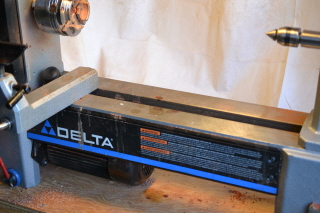
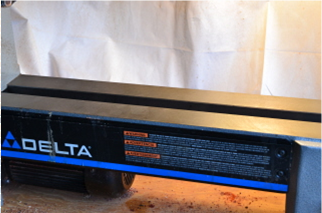
The next thing is to remove the tailstock and banjo to give you access to the lathe bed. Place these items in a safe location as they are typically made of cast metal and do not take to bouncing off of a hard surface like a concrete floor. You can then scrub and lubricate the bed with a combination of 0000 steel wool and WD-40. By using the steel wool it will remove any finishing materials that may have possibly dripped onto the bed as you were applying finish to a project. Major lumps of finishing materials can typically be removed by using something similar to a single edge razor blade scraper. The WD-40 will help float away any rust film. By wearing either latex or nitrile gloves you will avoid contact with the WD-40 and your hands will not smell of the WD-40 when you are finished cleaning and lubricating your lathe. The inside of the bed (also called ways) should be scrubbed at this time to allow the tailstock and the banjo to slide easier. Once the surface of the bed is relatively shiny you can wipe the bed with a clean cloth to remove any junk loosened during the scrubbing. At this time check the underside of the banjo and the tailstock to ensure there is no rust or crud buildup. While you have the 0000 steel wool and WD-40 handy give these two items a fast scrub where they contact the bed. Wipe the underside of the banjo and tailstock with the rag to remove the excess oil. Remember that oil soaked cloth is combustible so dispose of the rag either into a lidded metal safety can or air it outside to dry.

clean lathe 2

Once the bed, ways, banjo, and tailstock are cleaned then a dry silicone spray can be applied. It should be noted that WD-40 is actually a water dispersant and not a rust inhibitor. The CAA has banned the use of WD-40 in all aircraft maintenance facilities. It seems that once WD-40 has dried it actually attract moisture / water and therefore rust / corrosion. This information was shown in the November 2014 issue of Woodturning (www.woodworkersinstitute.com).

While you have the tailstock and banjo off of the lathe you will have better access to the drive motor on the lathes that have the motor under the bed. At this time you can give the vents on the motor short blasts of air to dislodge any accumulated dust and wood chips. This will help the motor to run cooler and also extend its life. You should do a check of the drive belt or belts if your lathe is so equipped to look for cracks or other issues and replace the belt if necessary.

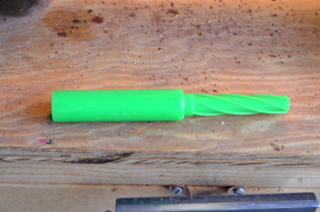
While the tailstock is off of the lathe feel the groove that the quill lock rides in. If there is a burr then a light touch with a file will remove the burr. The burr is typically caused by using a Jacobs’s chuck in the tail stock to drill pen blanks or other drilling operations as this causes a twisting action. Remount the banjo on the lathe bed and then remount the tailstock. To clean the Morse taper in the tailstock and also in the headstock there is a tool called a “Green Weenie” that is inserted into the Morse taper and turned by hand (with the lathe turned off). The Green Weenie is made of synthetic material and will not affect the Morse taper.

green weenie 3

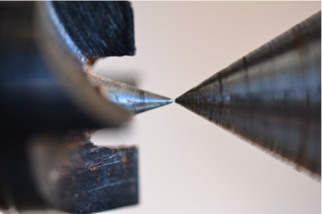
Putting a spur drive in the headstock and a cone center in the tail stock and bringing their points almost touching each other will allow you to see if the headstock and tailstock are in alignment. If the points do not align with each other then you will need to adjust the headstock per your owner’s manual. Misalignment of the headstock and the tailstock is potentially dangerous and will at the very least have a negative effect on the quality of your tuning.

alignment 4

The next thing to check on your lathe is the upper edge of your tool rest for any dings or dents. If there are any dings or dents these will have an unwanted effect on your turning as your tools will catch as they slide along the tool rest. The easiest way to remove the dings and dents is with a single cut mill bastard file. Just lock the tool rest in the banjo and stroke the file across the tool rest until the dents are removed. To safest way to prevent filing too much in one area is to draw the file from one end to the other on the tool rest with the file resting along the tool rest. With the tool rest removed from the banjo you can inspect the post for dings and dents caused by the tool rest lock. If there are any raised areas on the tool rest post use the file and gently remove the raised areas. The vertical post that fits into the banjo should be free of any rust and crud buildup. If there is any of either on the post then scrub the post with 0000 steel wool and WD-40. This is a good time to perform similar service to any spare tool rests you might have. You should also do a check of the mounting hole in the banjo for rust or crud and clean if required. You can spray a light coating of a dry silicone spray to the vertical post of the tool rest.

If your lathe has any wiggle due to any of its legs not making full contact on the floor or bench you should either shim or adjust the leveling posts if so equipped.

The last thing for you to check before turning ON your lathe is the condition of the power cord. If there are any cracks in the insulation or the plug is damaged in any way then you will need to replace the cord and/or the connector or have a qualified electrician do this.

Items potentially needed;
WD-40
0000 Steel Wool
Spur Drive
Cone Center
Dry Silicone Spray
Single Cut Mill Bastard File
Green Weenie
Gloves, Latex or Nitrile

Reference material;
The Frugal Woodturner (Ernie Conover)
Lathe, The Missing Shop Manual
Woodturning (November 2014)
Owners manual for your lathe

lathe parts 5

Introduction

My name is Tom Mikulis and as this is a new site I want to thank you for visiting my blog site. I hope to show you some of the various objects I have turned on a lathe, sometimes fabricated of just wood while at other times using wood combined with other materials. I also have knowledge of jewelry making and scrollsaw so I hope to include blogs of these items at a future time.


There is a saying amongst woodturners that if you ask three woodturners a question you will get six answers. This is because there are typically many ways to accomplish most tasks. As there are many ways to make items using a lathe I will attempt to show you a few of ‘my’ tricks that I have learned over the years. Most of what I know about spinning wood on a lathe I have learned from other woodturners, from the books I have read or from the videos I have watched, so most of my knowledge was passed down to me. Hopefully if you learn a new technique or method of making something you will take the time to pass that information on to others.


The first item to learn is that nobody knows everything! We can all learn something even if only the humility to accept honest constructive criticism. You should take classes, read books, watch instructional DVD’s, attend symposiums, and most of all practice safe tool handling. I have always enjoyed learning new things and alternate ways to perform tasks. From my first wood turning session at a Merrimack High School’s evening class, I knew I would enjoy the ability to take a basic block of wood and make it into an object with visual appeal and most of the time also with a function.


I would like to thank Phil Carle, Mike Darlowe, and especially Ernie Conover (The Frugal Woodturner) for their instructions and encouragement.